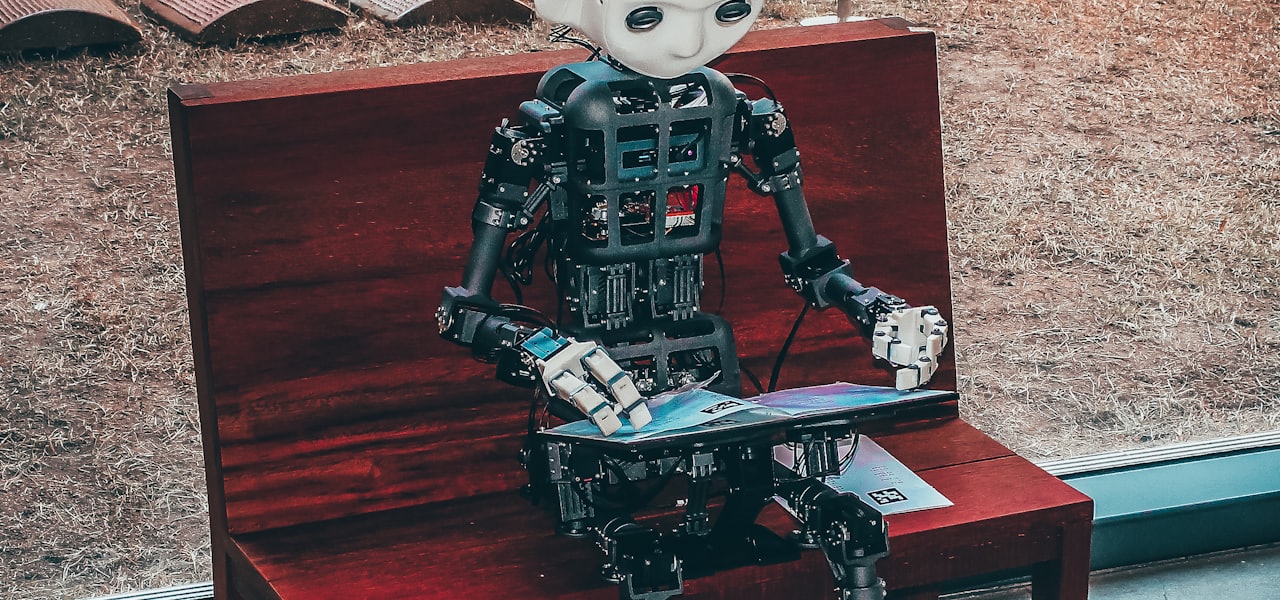
A distributed operating system is system software over a collection of independent software, networked, communicating, and physically separate computational nodes. They handle jobs which are serviced by multiple CPUs. Each individual node holds a specific software subset of the global aggregate operating system. Each subset is a composite of two distinct service provisioners. The first is a ubiquitous minimal kernel, or microkernel, that directly controls that node's hardware. Second is a higher-level collection of system management components that coordinate the node's individual and collaborative activities. These components abstract microkernel functions and support user applications. The microkernel and the management components collection work together. They support the system's goal of integrating multiple resources and processing functionality into an efficient and stable system. This seamless integration of individual nodes into a global system is referred to as transparency, or single system image; describing the illusion provided to users of the global system's appearance as a single computational entity. == Description == A distributed OS provides the essential services and functionality required of an OS but adds attributes and particular configurations to allow it to support additional requirements such as increased scale and availability. To a user, a distributed OS works in a manner similar to a single-node, monolithic operating system. That is, although it consists of multiple nodes, it appears to users and applications as a single-node. Separating minimal system-level functionality from additional user-level modular services provides a "separation of mechanism and policy". Mechanism and policy can be simply interpreted as "what something is done" versus "how something is done," respectively. This separation increases flexibility and scalability. == Overview == === The kernel === At each locale (typically a node), the kernel provides a minimally complete set of node-level utilities necessary for operating a node's underlying hardware and resources. These mechanisms include allocation, management, and disposition of a node's resources, processes, communication, and input/output management support functions. Within the kernel, the communications sub-system is of foremost importance for a distributed OS. In a distributed OS, the kernel often supports a minimal set of functions, including low-level address space management, thread management, and inter-process communication (IPC). A kernel of this design is referred to as a microkernel. Its modular nature enhances reliability and security, essential features for a distributed OS. === System management === System management components are software processes that define the node's policies. These components are the part of the OS outside the kernel. These components provide higher-level communication, process and resource management, reliability, performance and security. The components match the functions of a single-entity system, adding the transparency required in a distributed environment. The distributed nature of the OS requires additional services to support a node's responsibilities to the global system. In addition, the system management components accept the "defensive" responsibilities of reliability, availability, and persistence. These responsibilities can conflict with each other. A consistent approach, balanced perspective, and a deep understanding of the overall system can assist in identifying diminishing returns. Separation of policy and mechanism mitigates such conflicts. === Working together as an operating system === The architecture and design of a distributed operating system must realize both individual node and global system goals. Architecture and design must be approached in a manner consistent with separating policy and mechanism. In doing so, a distributed operating system attempts to provide an efficient and reliable distributed computing framework allowing for an absolute minimal user awareness of the underlying command and control efforts. The multi-level collaboration between a kernel and the system management components, and in turn between the distinct nodes in a distributed operating system is the functional challenge of the distributed operating system. This is the point in the system that must maintain a perfect harmony of purpose, and simultaneously maintain a complete disconnect of intent from implementation. This challenge is the distributed operating system's opportunity to produce the foundation and framework for a reliable, efficient, available, robust, extensible, and scalable system. However, this opportunity comes at a very high cost in complexity. === The price of complexity === In a distributed operating system, the exceptional degree of inherent complexity could easily render the entire system an anathema to any user. As such, the logical price of realizing a distributed operation system must be calculated in terms of overcoming vast amounts of complexity in many areas, and on many levels. This calculation includes the depth, breadth, and range of design investment and architectural planning required in achieving even the most modest implementation. These design and development considerations are critical and unforgiving. For instance, a deep understanding of a distributed operating system's overall architectural and design detail is required at an exceptionally early point. An exhausting array of design considerations are inherent in the development of a distributed operating system. Each of these design considerations can potentially affect many of the others to a significant degree. This leads to a massive effort in balanced approach, in terms of the individual design considerations, and many of their permutations. As an aid in this effort, most rely on documented experience and research in distributed computing power. == History == Research and experimentation efforts began in earnest in the 1970s and continued through the 1990s, with focused interest peaking in the late 1980s. A number of distributed operating systems were introduced during this period; however, very few of these implementations achieved even modest commercial success. Fundamental and pioneering implementations of primitive distributed operating system component concepts date to the early 1950s. Some of these individual steps were not focused directly on distributed computing, and at the time, many may not have realized their important impact. These pioneering efforts laid important groundwork, and inspired continued research in areas related to distributed computing. In the mid-1970s, research produced important advances in distributed computing. These breakthroughs provided a solid, stable foundation for efforts that continued through the 1990s. The accelerating proliferation of multi-processor and multi-core processor systems research led to a resurgence of the distributed OS concept. === The DYSEAC === One of the first efforts was the DYSEAC, a general-purpose synchronous computer. In one of the earliest publications of the Association for Computing Machinery, in April 1954, a researcher at the National Bureau of Standards – now the National Institute of Standards and Technology (NIST) – presented a detailed specification of the DYSEAC. The introduction focused upon the requirements of the intended applications, including flexible communications, but also mentioned other computers: Finally, the external devices could even include other full-scale computers employing the same digital language as the DYSEAC. For example, the SEAC or other computers similar to it could be harnessed to the DYSEAC and by use of coordinated programs could be made to work together in mutual cooperation on a common task… Consequently[,] the computer can be used to coordinate the diverse activities of all the external devices into an effective ensemble operation. The specification discussed the architecture of multi-computer systems, preferring peer-to-peer rather than master-slave. Each member of such an interconnected group of separate computers is free at any time to initiate and dispatch special control orders to any of its partners in the system. As a consequence, the supervisory control over the common task may initially be loosely distributed throughout the system and then temporarily concentrated in one computer, or even passed rapidly from one machine to the other as the need arises. …the various interruption facilities which have been described are based on mutual cooperation between the computer and the external devices subsidiary to it, and do not reflect merely a simple master-slave relationship. This is one of the earliest examples of a computer with distributed control. The Dept. of the Army reports certified it reliable and that it passed all acceptance tests in April 1954. It was completed and delivered on time, in May 1954. This was a "portable comput
Biorobotics
Biorobotics is an interdisciplinary science that combines the fields of biomedical engineering, cybernetics, and robotics to develop new technologies that integrate biology with mechanical systems to develop more efficient communication, alter genetic information, and create machines that imitate biological systems. == Cybernetics == Cybernetics focuses on the communication and system of living organisms and machines that can be applied and combined with multiple fields of study such as biology, mathematics, computer science, engineering, and much more. This discipline falls under the branch of biorobotics because of its combined field of study between biological bodies and mechanical systems. Studying these two systems allows for advanced analysis on the functions and processes of each system as well as the interactions between them. === History === Cybernetic theory is a concept that has existed for centuries, dating back to the era of Plato where he applied the term to refer to the "governance of people". The term cybernetique is seen in the mid-1800s used by physicist André-Marie Ampère. The term cybernetics was popularized in the late 1940s to refer to a discipline that touched on, but was separate, from established disciplines, such as electrical engineering, mathematics, and biology. === Science === Cybernetics is often misunderstood because of the breadth of disciplines it covers. In the early 20th century, it was coined as an interdisciplinary field of study that combines biology, science, network theory, and engineering. Today, it covers all scientific fields with system related processes. The goal of cybernetics is to analyze systems and processes of any system or systems in an attempt to make them more efficient and effective. === Applications === Cybernetics is used as an umbrella term so applications extend to all systems related scientific fields such as biology, mathematics, computer science, engineering, management, psychology, sociology, art, and more. Cybernetics is used amongst several fields to discover principles of systems, adaptation of organisms, information analysis and much more. == Genetic engineering == Genetic engineering is a field that uses advances in technology to modify biological organisms. Through different methods, scientists are able to alter the genetic material of microorganisms, plants and animals to provide them with desirable traits. For example, making plants grow bigger, better, and faster. Genetic engineering is included in biorobotics because it uses new technologies to alter biology and change an organism's DNA for their and society's benefit. === History === Although humans have modified genetic material of animals and plants through artificial selection for millennia (such as the genetic mutations that developed teosinte into corn and wolves into dogs), genetic engineering refers to the deliberate alteration or insertion of specific genes to an organism's DNA. The first successful case of genetic engineering occurred in 1973 when Herbert Boyer and Stanley Cohen were able to transfer a gene with antibiotic resistance to a bacterium. === Science === There are three main techniques used in genetic engineering: The plasmid method, the vector method and the biolistic method. ==== Plasmid method ==== This technique is used mainly for microorganisms such as bacteria. Through this method, DNA molecules called plasmids are extracted from bacteria and placed in a lab where restriction enzymes break them down. As the enzymes do this, some develop a rough edge that resembles that of a staircase which is considered 'sticky' and capable of reconnecting. These 'sticky' molecules are inserted into another bacteria where they will connect to the DNA rings with the altered genetic material. ==== Vector method ==== The vector method is considered a more precise technique than the plasmid method as it involves the transfer of a specific gene instead of a whole sequence. In the vector method, a specific gene from a DNA strand is isolated through restriction enzymes in a laboratory and is inserted into a vector. Once the vector accepts the genetic code, it is inserted into the host cell where the DNA will be transferred. ==== Biolistic method ==== The biolistic method is typically used to alter the genetic material of plants. This method embeds the desired DNA with a metallic particle such as gold or tungsten in a high speed gun. The particle is then bombarded into the plant. Due to the high velocities and the vacuum generated during bombardment, the particle is able to penetrate the cell wall and inserts the new DNA into the cell. === Applications === Genetic engineering has many uses in the fields of medicine, research and agriculture. In the medical field, genetically modified bacteria are used to produce drugs such as insulin, human growth hormones and vaccines. In research, scientists genetically modify organisms to observe physical and behavioral changes to understand the function of specific genes. In agriculture, genetic engineering is extremely important as it is used by farmers to grow crops that are resistant to herbicides and to insects such as BTCorn. == Bionics == Bionics is a medical engineering field and a branch of biorobotics consisting of electrical and mechanical systems that imitate biological systems, such as prosthetics and hearing aids. It's a portmanteau that combines biology and electronics. === History === The history of bionics goes as far back in time as ancient Egypt. A prosthetic toe made out of wood and leather was found on the foot of a mummy. The time period of the mummy corpse was estimated to be from around the fifteenth century B.C. Bionics can also be witnessed in ancient Greece and Rome. Prosthetic legs and arms were made for amputee soldiers. In the early 16th century, a French military surgeon by the name of Ambroise Pare became a pioneer in the field of bionics. He was known for making various types of upper and lower prosthetics. One of his most famous prosthetics, Le Petit Lorrain, was a mechanical hand operated by catches and springs. During the early 19th century, Alessandro Volta further progressed bionics. He set the foundation for the creation of hearing aids with his experiments. He found that electrical stimulation could restore hearing by inserting an electrical implant to the saccular nerve of a patient's ear. In 1945, the National Academy of Sciences created the Artificial Limb Program, which focused on improving prosthetics since there were a large number of World War II amputee soldiers. Since this creation, prosthetic materials, computer design methods, and surgical procedures have improved, creating modern-day bionics. === Science === ==== Prosthetics ==== The important components that make up modern-day prosthetics are the pylon, the socket, and the suspension system. The pylon is the internal frame of the prosthetic that is made up of metal rods or carbon-fiber composites. The socket is the part of the prosthetic that connects the prosthetic to the person's missing limb. The socket consists of a soft liner that makes the fit comfortable, but also snug enough to stay on the limb. The suspension system is important in keeping the prosthetic on the limb. The suspension system is usually a harness system made up of straps, belts or sleeves that are used to keep the limb attached. The operation of a prosthetic could be designed in various ways. The prosthetic could be body-powered, externally-powered, or myoelectrically powered. Body-powered prosthetics consist of cables attached to a strap or harness, which is placed on the person's functional shoulder, allowing the person to manipulate and control the prosthetic as he or she deems fit. Externally-powered prosthetics consist of motors to power the prosthetic and buttons and switches to control the prosthetic. Myoelectrically powered prosthetics are new, advanced forms of prosthetics where electrodes are placed on the muscles above the limb. The electrodes will detect the muscle contractions and send electrical signals to the prosthetic to move the prosthetic. The downside to this type of prosthetic is that if the sensors are not placed correctly on the limb then the electrical impulses will fail to move the prosthetic. TrueLimb is a specific brand of prosthetics that uses myoelectrical sensors which enable a person to have control of their bionic limb. ==== Hearing aids ==== Four major components make up the hearing aid: the microphone, the amplifier, the receiver, and the battery. The microphone takes in outside sound, turns that sound to electrical signals, and sends those signals to the amplifier. The amplifier increases the sound and sends that sound to the receiver. The receiver changes the electrical signal back into sound and sends the sound into the ear. Hair cells in the ear will sense the vibrations from the sound, convert the vibrations into nerve signals, and send it to the brain so
Extremal Ensemble Learning
Extremal Ensemble Learning (EEL) is a machine learning algorithmic paradigm for graph partitioning. EEL creates an ensemble of partitions and then uses information contained in the ensemble to find new and improved partitions. The ensemble evolves and learns how to form improved partitions through extremal updating procedure. The final solution is found by achieving consensus among its member partitions about what the optimal partition is. == Reduced-Network Extremal Ensemble Learning (RenEEL) == A particular implementation of the EEL paradigm is the Reduced-Network Extremal Ensemble Learning (RenEEL) scheme for partitioning a graph. RenEEL uses consensus across many partitions in an ensemble to create a reduced network that can be efficiently analyzed to find more accurate partitions. These better quality partitions are subsequently used to update the ensemble. An algorithm that utilizes the RenEEL scheme is currently the best algorithm for finding the graph partition with maximum modularity, which is an NP-hard problem.
Information Harvesting
Information Harvesting (IH) was an early data mining product from the 1990s. It was invented by Ralphe Wiggins and produced by the Ryan Corp, later Information Harvesting Inc., of Cambridge, Massachusetts. Wiggins had a background in genetic algorithms and fuzzy logic. IH sought to infer rules from sets of data. It did this first by classifying various input variables into one of a number of bins, thereby putting some structure on the continuous variables in the input. IH then proceeds to generate rules, trading off generalization against memorization, that will infer the value of the prediction variable, possibly creating many levels of rules in the process. It included strategies for checking if overfitting took place and, if so, correcting for it. Because of its strategies for correcting for overfitting by considering more data, and refining the rules based on that data, IH might also be considered to be a form of machine learning. The advantage of IH, as compared with other data mining products of its time and even later, was that it provided a mechanism for finding multiple rules that would classify the data and determining, according to set criteria, the best rules to use.
Almeida–Pineda recurrent backpropagation
Almeida–Pineda recurrent backpropagation is an extension to the backpropagation algorithm that is applicable to recurrent neural networks. It is a type of supervised learning. It was described somewhat cryptically in Richard Feynman's senior thesis, and rediscovered independently in the context of artificial neural networks by both Fernando Pineda and Luis B. Almeida. A recurrent neural network for this algorithm consists of some input units, some output units and eventually some hidden units. For a given set of (input, target) states, the network is trained to settle into a stable activation state with the output units in the target state, based on a given input state clamped on the input units.
Logistics automation
Logistics automation is the application of computer software or automated machinery to logistics operations in order to improve its efficiency. Typically this refers to operations within a warehouse or distribution center, with broader tasks undertaken by supply chain engineering systems and enterprise resource planning systems. Logistics automation systems can powerfully complement the facilities provided by these higher level computer systems. The focus on an individual node within a wider logistics network allows systems to be highly tailored to the requirements of that node. == Components == Logistics automation systems comprise a variety of hardware and software components: Fixed machinery Automated storage and retrieval systems, including: Cranes serve a rack of locations, allowing many levels of stock to be stacked vertically, and allowing for higher storage densities and better space utilization than alternatives. In systems produced by Amazon Robotics, automated guided vehicles move items to a human picker. Conveyors: Containers can enter automated conveyors in one area of the warehouse and, either through hard-coded rules or data input, be moved to a selected destination. Vertical carousels based on the paternoster lift system or using space optimization, similar to vending machines, but on a larger scale. Sortation systems: similar to conveyors but typically with higher capacity and able to divert containers more quickly. Typically used to distribute high volumes of small cartons to a large set of locations. Industrial robots: four- to six-axis industrial robots, e.g. palletizing robots, are used for palletizing, depalletizing, packaging, commissioning and order picking. Typically all of these will automatically identify and track containers using barcodes or, increasingly, RFID tags. Motion check weighers may be used to reject cases or individual products that are under or over their specified weight. They are often used in kitting conveyor lines to ensure all pieces belonging in the kit are present. Mobile technology Radio data terminals: these are handheld or truck-mounted terminals which connect by radio to logistics automation software and provide instructions to operators moving throughout the warehouse. Many also have barcode scanners to allow identification of containers more quickly and accurately than manual keyboard entry. Software Integration software: this provides overall control of the automation machinery and allows cranes to be connected to conveyors for seamless stock movements. Operational control software: provides low-level decision-making, such as where to store incoming containers, and where to retrieve them when requested. Business control software: provides higher-level functionality, such as identification of incoming deliveries/stock, scheduling order fulfillment, and assignment of stock to outgoing trailers. == Benefits == A typical warehouse or distribution center will receive stock of a variety of products from suppliers and store these until the receipt of orders from customers, whether individual buyers (e.g. mail order), retail branches (e.g. chain stores), or other companies (e.g. wholesalers). A logistics automation system may provide the following: Automated goods in processes: Incoming goods can be marked with barcodes and the automation system notified of the expected stock. On arrival, the goods can be scanned and thereby identified, and taken via conveyors, sortation systems, and automated cranes into an automatically assigned storage location. Automated goods retrieval for orders: On receipt of orders, the automation system is able to immediately locate goods and retrieve them to a pick-face location. Automated dispatch processing: Combining knowledge of all orders placed at the warehouse the automation system can assign picked goods into dispatch units and then into outbound loads. Sortation systems and conveyors can then move these onto the outgoing trailers. If needed, repackaging to ensure proper protection for further distribution or to change the package format for specific retailers/customers. A complete warehouse automation system can drastically reduce the workforce required to run a facility, with human input required only for a few tasks, such as picking units of product from a bulk packed case. Even here, assistance can be provided with equipment such as pick-to-light units. Smaller systems may only be required to handle part of the process. Examples include automated storage and retrieval systems, which simply use cranes to store and retrieve identified cases or pallets, typically into a high-bay storage system which would be unfeasible to access using fork-lift trucks or any other means. The use of Automatic Guided Vehicles maximizes the output compared to humans since they can do repetitive tasks for long hours and with least to no supervision. An AGV is built and programmed for precision and accuracy thereby reducing the chances of errors in a warehouse, especially when dealing with fragile goods. == Automation software == Software or cloud-based SaaS solutions are used for logistics automation which helps the supply chain industry in automating the workflow as well as management of the system. Knowledge @ Wharton staff writers noted in 2011 that some manufacturers and retailers were weathering the Great Recession "by signing up for pay-as-you-go logistics services available through the Internet 'cloud'". They identified the benefits and reduced costs which came from sharing information about shipments with suppliers, hauliers and end users. There is little generalized software available in this market. This is because there is no rule to generalize the system as well as work flow even though the practice is more or less the same. Most of the commercial companies do use one or the other of the custom solutions. But there are various software solutions that are being used within the departments of logistics. There are a few departments in Logistics, namely: Conventional Department, Container Department, Warehouse, Marine Engineering, Heavy Haulage, etc. Software used in these departments Conventional department : CVT software / CTMS software. Container Trucking: CTMS software Warehouse : WMS/WCS Improving Effectiveness of Logistics Management Logistical Network Information Transportation Sound Inventory Management Warehousing, Materials Handling & Packaging
Softmax function
The softmax function, also known as softargmax or normalized exponential function, converts a tuple of K real numbers into a probability distribution over K possible outcomes. It is a generalization of the logistic function to multiple dimensions, and is used in multinomial logistic regression. The softmax function is often used as the last activation function of a neural network to normalize the output of a network to a probability distribution over predicted output classes. == Definition == The softmax function takes as input a tuple z of K real numbers, and normalizes it into a probability distribution consisting of K probabilities proportional to the exponentials of the input numbers. That is, prior to applying softmax, some tuple components could be negative, or greater than one; and might not sum to 1; but after applying softmax, each component will be in the interval ( 0 , 1 ) {\displaystyle (0,1)} , and the components will add up to 1, so that they can be interpreted as probabilities. Furthermore, the larger input components will correspond to larger probabilities. Formally, the standard (unit) softmax function σ : R K → ( 0 , 1 ) K {\displaystyle \sigma :\mathbb {R} ^{K}\to (0,1)^{K}} , where K > 1 {\displaystyle K>1} , takes a tuple z = ( z 1 , … , z K ) ∈ R K {\displaystyle \mathbf {z} =(z_{1},\dotsc ,z_{K})\in \mathbb {R} ^{K}} and computes each component of vector σ ( z ) ∈ ( 0 , 1 ) K {\displaystyle \sigma (\mathbf {z} )\in (0,1)^{K}} with σ ( z ) i = e z i ∑ j = 1 K e z j . {\displaystyle \sigma (\mathbf {z} )_{i}={\frac {e^{z_{i}}}{\sum _{j=1}^{K}e^{z_{j}}}}\,.} In words, the softmax applies the standard exponential function to each element z i {\displaystyle z_{i}} of the input tuple z {\displaystyle \mathbf {z} } (consisting of K {\displaystyle K} real numbers), and normalizes these values by dividing by the sum of all these exponentials. The normalization ensures that the sum of the components of the output vector σ ( z ) {\displaystyle \sigma (\mathbf {z} )} is 1. The term "softmax" derives from the amplifying effects of the exponential on any maxima in the input tuple. For example, the standard softmax of ( 1 , 2 , 8 ) {\displaystyle (1,2,8)} is approximately ( 0.001 , 0.002 , 0.997 ) {\displaystyle (0.001,0.002,0.997)} , which amounts to assigning almost all of the total unit weight in the result to the position of the tuple's maximal element (of 8). In general, instead of e a different base b > 0 can be used. As above, if b > 1 then larger input components will result in larger output probabilities, and increasing the value of b will create probability distributions that are more concentrated around the positions of the largest input values. Conversely, if 0 < b < 1 then smaller input components will result in larger output probabilities, and decreasing the value of b will create probability distributions that are more concentrated around the positions of the smallest input values. Writing b = e β {\displaystyle b=e^{\beta }} or b = e − β {\displaystyle b=e^{-\beta }} (for real β) yields the expressions: σ ( z ) i = e β z i ∑ j = 1 K e β z j or σ ( z ) i = e − β z i ∑ j = 1 K e − β z j for i = 1 , … , K . {\displaystyle \sigma (\mathbf {z} )_{i}={\frac {e^{\beta z_{i}}}{\sum _{j=1}^{K}e^{\beta z_{j}}}}{\text{ or }}\sigma (\mathbf {z} )_{i}={\frac {e^{-\beta z_{i}}}{\sum _{j=1}^{K}e^{-\beta z_{j}}}}{\text{ for }}i=1,\dotsc ,K.} A value proportional to the reciprocal of β is sometimes referred to as the temperature: β = 1 / k T {\textstyle \beta =1/kT} , where k is typically 1 or the Boltzmann constant and T is the temperature. A higher temperature results in a more uniform output distribution (i.e. with higher entropy; it is "more random"), while a lower temperature results in a sharper output distribution, with one value dominating. In some fields, the base is fixed, corresponding to a fixed scale, while in others the parameter β (or T) is varied. The softmax function is a multiple-variable generalization of the logistic function. == Interpretations == === Smooth arg max === The Softmax function is a smooth approximation to the arg max function: the function whose value is the index of a tuple's largest element. The name "softmax" may be misleading. Softmax is not a smooth maximum (that is, a smooth approximation to the maximum function). The term "softmax" is also used for the closely related LogSumExp function, which is a smooth maximum. For this reason, some prefer the more accurate term "softargmax", though the term "softmax" is conventional in machine learning. This section uses the term "softargmax" for clarity. Formally, instead of considering the arg max as a function with categorical output 1 , … , n {\displaystyle 1,\dots ,n} (corresponding to the index), consider the arg max function with one-hot representation of the output (assuming there is a unique maximum arg): a r g m a x ( z 1 , … , z n ) = ( y 1 , … , y n ) = ( 0 , … , 0 , 1 , 0 , … , 0 ) , {\displaystyle \operatorname {arg\,max} (z_{1},\,\dots ,\,z_{n})=(y_{1},\,\dots ,\,y_{n})=(0,\,\dots ,\,0,\,1,\,0,\,\dots ,\,0),} where the output coordinate y i = 1 {\displaystyle y_{i}=1} if and only if i {\displaystyle i} is the arg max of ( z 1 , … , z n ) {\displaystyle (z_{1},\dots ,z_{n})} , meaning z i {\displaystyle z_{i}} is the unique maximum value of ( z 1 , … , z n ) {\displaystyle (z_{1},\,\dots ,\,z_{n})} . For example, in this encoding a r g m a x ( 1 , 5 , 10 ) = ( 0 , 0 , 1 ) , {\displaystyle \operatorname {arg\,max} (1,5,10)=(0,0,1),} since the third argument is the maximum. This can be generalized to multiple arg max values (multiple equal z i {\displaystyle z_{i}} being the maximum) by dividing the 1 between all max args; formally 1/k where k is the number of arguments assuming the maximum. For example, a r g m a x ( 1 , 5 , 5 ) = ( 0 , 1 / 2 , 1 / 2 ) , {\displaystyle \operatorname {arg\,max} (1,\,5,\,5)=(0,\,1/2,\,1/2),} since the second and third argument are both the maximum. In case all arguments are equal, this is simply a r g m a x ( z , … , z ) = ( 1 / n , … , 1 / n ) . {\displaystyle \operatorname {arg\,max} (z,\dots ,z)=(1/n,\dots ,1/n).} Points z with multiple arg max values are singular points (or singularities, and form the singular set) – these are the points where arg max is discontinuous (with a jump discontinuity) – while points with a single arg max are known as non-singular or regular points. With the last expression given in the introduction, softargmax is now a smooth approximation of arg max: as β → ∞ {\displaystyle \beta \to \infty } , softargmax converges to arg max. There are various notions of convergence of a function; softargmax converges to arg max pointwise, meaning for each fixed input z as β → ∞ {\displaystyle \beta \to \infty } , σ β ( z ) → a r g m a x ( z ) . {\displaystyle \sigma _{\beta }(\mathbf {z} )\to \operatorname {arg\,max} (\mathbf {z} ).} However, softargmax does not converge uniformly to arg max, meaning intuitively that different points converge at different rates, and may converge arbitrarily slowly. In fact, softargmax is continuous, but arg max is not continuous at the singular set where two coordinates are equal, while the uniform limit of continuous functions is continuous. The reason it fails to converge uniformly is that for inputs where two coordinates are almost equal (and one is the maximum), the arg max is the index of one or the other, so a small change in input yields a large change in output. For example, σ β ( 1 , 1.0001 ) → ( 0 , 1 ) , {\displaystyle \sigma _{\beta }(1,\,1.0001)\to (0,1),} but σ β ( 1 , 0.9999 ) → ( 1 , 0 ) , {\displaystyle \sigma _{\beta }(1,\,0.9999)\to (1,\,0),} and σ β ( 1 , 1 ) = 1 / 2 {\displaystyle \sigma _{\beta }(1,\,1)=1/2} for all inputs: the closer the points are to the singular set ( x , x ) {\displaystyle (x,x)} , the slower they converge. However, softargmax does converge compactly on the non-singular set. Conversely, as β → − ∞ {\displaystyle \beta \to -\infty } , softargmax converges to arg min in the same way, where here the singular set is points with two arg min values. In the language of tropical analysis, the softmax is a deformation or "quantization" of arg max and arg min, corresponding to using the log semiring instead of the max-plus semiring (respectively min-plus semiring), and recovering the arg max or arg min by taking the limit is called "tropicalization" or "dequantization". It is also the case that, for any fixed β, if one input z i {\displaystyle z_{i}} is much larger than the others relative to the temperature, T = 1 / β {\displaystyle T=1/\beta } , the output is approximately the arg max. For example, a difference of 10 is large relative to a temperature of 1: σ ( 0 , 10 ) := σ 1 ( 0 , 10 ) = ( 1 / ( 1 + e 10 ) , e 10 / ( 1 + e 10 ) ) ≈ ( 0.00005 , 0.99995 ) {\displaystyle \sigma (0,\,10):=\sigma _{1}(0,\,10)=\left(1/\left(1+e^{10}\right),\,e^{10}/\left(1+e^{10}\right)\right)\approx (0.00005